 KES
 USD - International

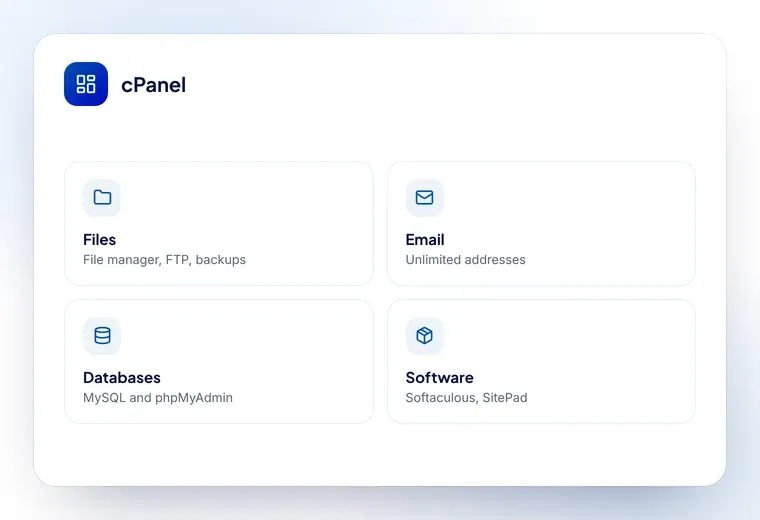
The control panel is the software you actually spend your time in. It decides how you create email addresses, restore a backup, install WordPress and add a domain — so picking the wrong one costs you hours you never budgeted for.
The panels worth considering
cPanel and WHM
The one most people know, and the one most Kenyan developers have already used. cPanel is what your clients see; WHM is what you administer accounts with. Its advantage is familiarity — if you hand a client a cPanel login, they can probably find their way around without you.
Plesk
Strong on Windows as well as Linux, which matters if you run ASP.NET or SQL Server. The interface is cleaner than cPanel’s in places, but fewer people have used it, so expect more questions from clients.
DirectAdmin
Lighter than both, noticeably cheaper, and quick on a small server. It does less hand-holding, which is fine if you are comfortable administering a server and a poor fit if you are not.
The free panels
CyberPanel, CentOS Web Panel and Webmin cost nothing and do the basics. They are a reasonable choice for a server only you touch. They are a harder sell to clients, and you are more on your own when something breaks.
How to choose
- Clients will log in themselves — cPanel, because they have probably seen it before
- Windows applications — Plesk, which is the only one of the three that does Windows properly
- A small server you administer alone — DirectAdmin, or a free panel
- Reselling hosting — cPanel with WHM, because the reseller tooling is the most complete
What they cost — and how to pay less
Panel licenses are a per-server monthly cost, and for cPanel that cost has risen sharply over the years. This is where a shared license changes the sums: you run the genuine panel, with updates direct from the vendor, for a fraction of the list price.
We sell shared licenses for cPanel, Plesk, DirectAdmin, CloudLinux, LiteSpeed and more, so the panel you actually want stops being the one you cannot justify.
What a control panel actually does for you
It is easy to dismiss the panel as cosmetic. It is not. Without one, every routine job on a server is a command, a config file and a restart:
- Creating a website means a virtual host, a document root, permissions and a reload
- Adding an email address means a mail server, a mailbox, DNS records and a spam filter
- Issuing an SSL certificate means a certificate authority client, a renewal timer and a reload
- Taking a backup means a script, a schedule and somewhere to put it
- Giving a client access means a user, a group and a careful think about what they can reach
A control panel turns each of those into a form. That is worth something on your own server; it is worth a great deal when you are handing the account to a client who has never seen a terminal.
Which panel suits which job
cPanel and WHM
The one most Kenyan developers already know, and the one most clients recognise. WHM creates and manages accounts; each account gets cPanel. If you host for other people, the familiarity alone is worth it — you will spend less time explaining it.
Plesk
The strongest option if Windows is in the picture, and the cleanest interface of the three. Worth a look if your team is more comfortable with a modern UI than with cPanel’s density.
DirectAdmin
Lighter and cheaper than both, and it does the same core jobs well. A good fit when you are running your own sites rather than handing accounts to clients, and when the licence cost matters more than familiarity.
The free panels
CyberPanel, CWP and Webmin cost nothing and are genuinely capable. The trade is support and polish: when something breaks at 2am, a forum thread is a different experience from a vendor with an SLA.
The cost nobody budgets for
Here is the part that catches people out. A VPS might cost less per month than the panel you put on it. Bought direct from the vendor, cPanel is priced per account and has risen steadily for years; Plesk and DirectAdmin are cheaper but still a real line item.
That single number decides whether a small hosting business works. It is also why shared licences exist — the same genuine software, updates from the vendor, at a fraction of list price. If you are running one or two servers, that difference is most of your margin.
How to choose, in one paragraph
If you host for clients, choose cPanel, because they already know it and so does every developer they might hire. If you run your own sites and want to spend less, choose DirectAdmin. If Windows is involved, choose Plesk. If the budget is zero and you are comfortable fixing things yourself, choose CyberPanel and keep good backups. Then price the licence before you price the server, because it is often the larger of the two.